


Page 11 - LKM70
P. 11
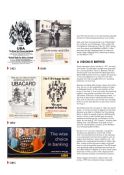
    1965 1988
and the introduction of a new banking decree aimed at improving governance over banks.
UBA was then incorporated as a limited liabil- ity company on 23 February, 1961 under the Compliance Ordinance (Cap 37) 1922, taking over the assets and liabilities of B&FB. It later became the first Nigerian bank to make an Initial Public Offering (IPO), following its listing on the NSE in 1970.
A VISION IS BIRTHED
Some decades down the line in 1997, an insol- vent bank, Crystal Bank Limited was acquired by a young banker, Tony O. Elumelu. The dis- tressed bank was rechristened Standard Trust Bank (STB) Limited and thus, began the journey to the actualization of a vision by the then 34-year old, the youngest CEO of a banking institution at that time.
Elumelu, bursting with energy, ideas and ambi- tion, set out on an audacious mission to take
a distressed bank, at the very bottom of the rung, to the top 3, at a time when the banking industry was heavily crowded with well over 100 banks. STB had a 3-teir strategic intent: 1st tier was to become a viable financial institu- tion; 2nd, to become one of the top 10 banks in the country and 3rd tier, to become one of the top 3.
By introducing the concept of ‘debt for equity swap’, a novel concept in Nigeria at the time, Elumelu was able to stabilize the floundering Bank. A debt for equity swap is a refinancing deal in which a debt holder gets an equity position in exchange for cancellation of the debt. By the end of 1997, barely 7 months after taking over, the STB team was able to turn around Crystal Bank’s position of N6.49million to a whooping N473million.
Driven by an uncanny foresight, a guerrilla strategy was devised in which STB, rather
than concentrate its branches in the already over-saturated commercial locations such as Lagos, Port Harcourt, Kano, Onitsha, etc., tar- geted non-commercial locations in state cap- itals, where all the big banks rarely ventured into or had all together ignored. The STB brand was gradually being domesticated across all the other states in Nigeria at a time when bank branches in the country were disproportion- ately skewed towards commercial locations.
When Nigeria returned to democratic rule in May 1999 and started running a federal
   1992
  2004
11


